The first key visual from "The Darwin Incident" produced an immediate firestorm online, one of those mythical moments when a single image lights a thousand fires of discussion. Picture the flash of phone screens in late-night dorm rooms and crowded city buses as fans slowed scrolling, fascinated by Charlie: the half-chimp, half-human "humanzee" at the center of this new, speculative seinen drama. In a matter of minutes, this piece transcended promo, it was an event, a sign connecting with a generation that was growing more and more enthralled with tales of grey areas and scientific accountability. As Indian subcontinent anime viewers look for more mature, cerebral plots beyond the dependable punchlines of shonen, "The Darwin Incident" which sets to premier in January 2026, presents an arresting new standard.
The Visual: Unsettling Beauty & Symbolism
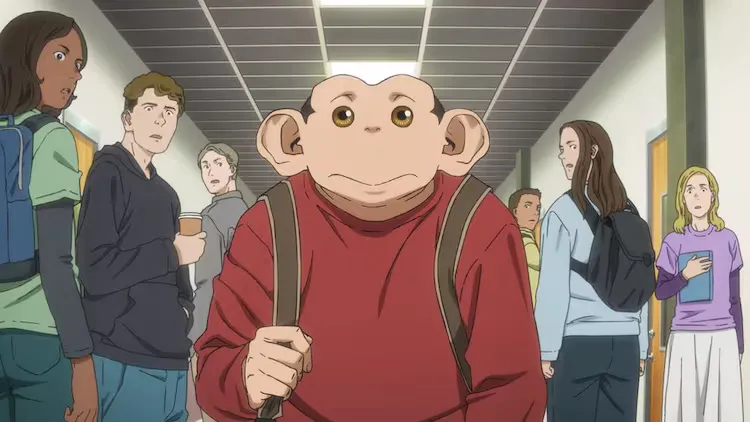
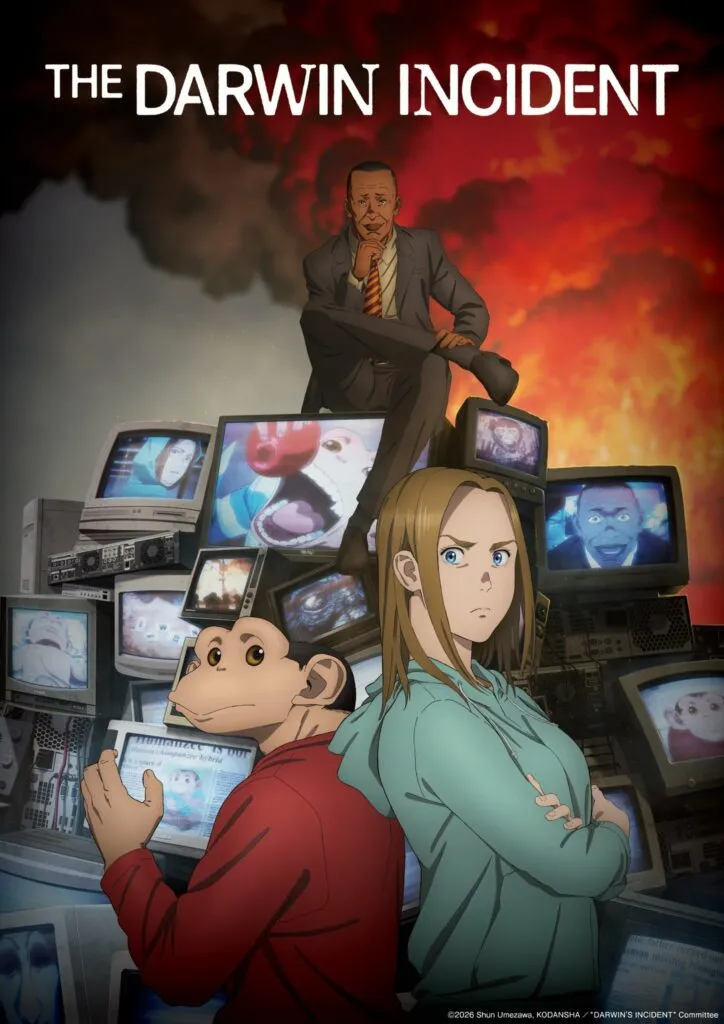
The just-released main image tied to international "Monkey Day" interest, has Charlie and Lucy standing tall against impending peril, the villain Rivera looming ghostly in the distance. Charlie's design is key to the impact of the image. While the ultra-realistic, finely detailed human population is sharply focused, his "cute" manga-style face engenders instant emotional conflict. Charlie's ambivalent facial expression wide, questioning eyes, neither smiling nor scowling makes him inscrutable, walking a line between innocence and animalism. It's a calculated, unsettling decision: by avoiding the convenient signifiers of feeling, the image forces the audience to question their own preconceptions, to wonder what it is for something or someone to possess a soul.
Subtext and Artistic Direction
The direction of the art, under Shinpei Tomooka and worked into being by Bellnox Films, uses oppositional color schemes: Lucy and Charlie's warmth stands strong against the dark, ominous coldness from Rivera and the threats of the world. The placement of Charlie is deferentially at the visual's center, not as victim or monster, but as living question mark. The teaser tagline, "The meeting of a human and a non-human change the world," positions the image as something greater than spectacle, a philosophical test.
Both critics and fans have pointed out the loaded symbolism in the image. The fact that the human and the non-human sit side by side isn't merely allegorical, it's a mirroring of the conflicted society trapped in a liminal state between denial and acceptance, resonating with actual debates surrounding genetic modification, AI, and environmental responsibility. Charlie's half-turn, almost defensive pose provokes sympathy even as it disrupts any clear sense of belonging, emphasizing otherness and coexistence themes.
Stats, Reception & Societal Impact
Since its reveal, the image has caused a dramatic increase in interaction: the initial manga has since sold over 2 million copies worldwide. "The Darwin Incident" dominated manga awards such as Manga Taisho and Japan Media Arts Excellence Award, highlighting its appeal to young readers looking for substance rather than formula. Social media feeds all over India and the world have exploded with debate, with numerous people praising Charlie as a new hero for ethical discussion in popular culture.
The creative team behind the anime, director Naokatsu Tsuda and scriptwriter Shinichi Inozume, underscores the realism and depth involved in Charlie's characterization through interviews and authorized featurettes. Cast members, in particular Atsumi Tanezaki as the voice of Charlie, articulated the emotional struggle of portraying a character who "thinks deeply about everything around him," posing the character and visual as a catalyst for individual and collective self-reflection.
Environmental & Ethical Themes
At the core of the image, and that of the series, is a sharp commentary on the duty of humanity to the other, science, accident, or heritage. The green undertones echo as Charlie is both victim and hope for a world grappling with environmental catastrophe and questing for meaning in genetic potential.
Conclusion
As teenage anime viewers transition from safe, action-oriented fare to more complex stories, "The Darwin Incident" is more than a movie: it's a mirror held up to concerns about identity, ethics, and the limits of humanity itself. The poster image isn't merely promotional material; it's an invitation to question, to sympathize, and to ask, "what if." When did you last see a single picture make you re-evaluate what it means to be alive?