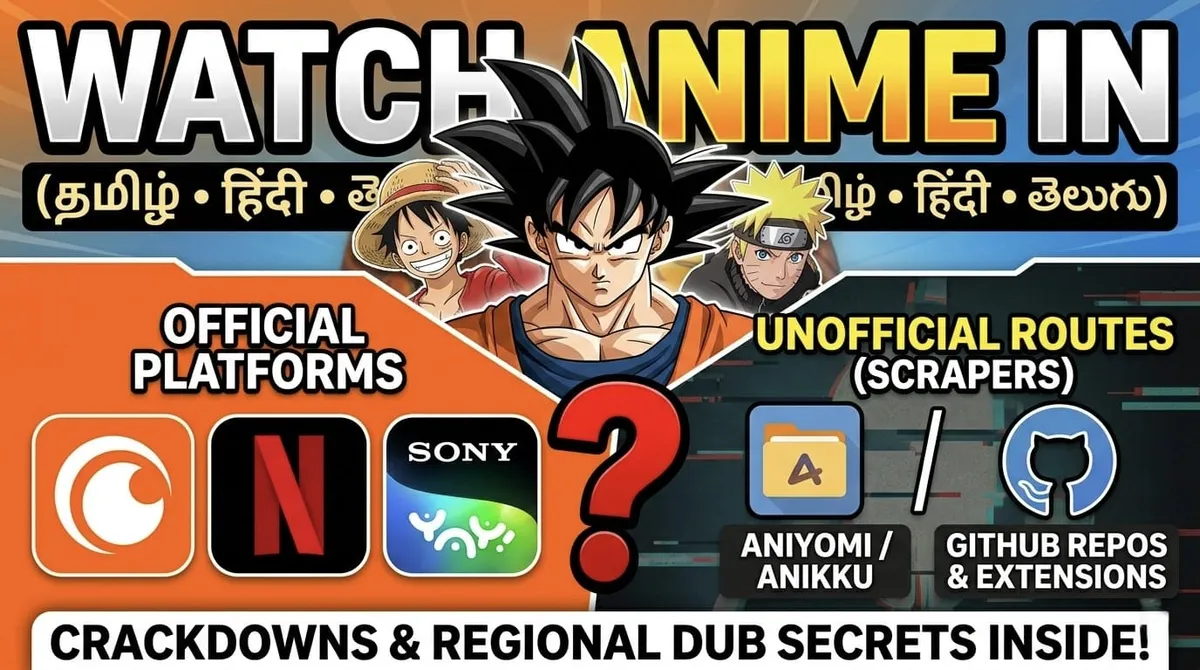
Anime has exploded in popularity across India over the past decade, and nowhere is that growth more visible than in the demand for regional language dubs. Tamil, Hindi, and Telugu audiences have embraced titles like Dragon Ball, Naruto, One Piece, and Demon Slayer with genuine passion. Whether you want to watch legally or are simply curious about what options exist out there, this guide covers the full landscape — the good, the questionable, and the outright risky.
Legal Platforms: The Right Way to Watch

The legal streaming ecosystem for anime in India has grown considerably, and several platforms now offer content dubbed in Hindi, Tamil, or Telugu.
Crunchyroll is the gold standard for anime streaming globally. In India, it offers a solid library with Hindi dubs on a number of popular titles, including Attack on Titan, My Hero Academia, and Jujutsu Kaisen. While Tamil and Telugu dubs are less common on Crunchyroll, the platform continues to expand its regional language offerings. A premium subscription unlocks the full library, Crunchyroll has essentially monopolized the dedicated anime market in India through a massive pricing overhaul and an aggressive localization strategy. Recognizing India as a pivotal demographic, Crunchyroll slashed its subscription prices drastically. As of recent updates, their standard "Fan" tier sits at an incredibly accessible ₹79 per month. However, the true value lies in the "Mega Fan" tier, which allows offline downloads and multi-device streaming for ₹99 per month. Most notably, their annual Mega Fan subscription was recently dropped to a staggering ₹475 per year (roughly ₹40 a month). For this price, users gain access to a rapidly expanding library of current-airing titles professionally dubbed in Hindi, Tamil, and Telugu, featuring high-quality audio mixing and veteran Indian voice actors.
The Caveats: Despite the stellar pricing, Crunchyroll isn't without its flaws. The Indian library is notably smaller than the North American version due to complex licensing hurdles. Moreover, their speed of adding new titles can be frustratingly slow; fans often find themselves waiting months for back-catalog dubs that have been available in other regions for years. This "library lag" is the primary reason many fans still look toward unofficial alternatives.
Netflix India has invested notably in regional dubbing. Shows like Naruto, One Piece, Sword Art Online, Death Note, and several Studio Ghibli films are available dubbed in Hindi, and in some cases Tamil and Telugu. Netflix is arguably the best legal destination for regionally dubbed anime in India right now, with high-quality productions that make the experience feel native. While their focus leans heavily toward Hindi dubs rather than South Indian languages, their user interface and video bitrates are unmatched. However, Netflix is subject to higher price constraints, with mobile-only plans starting at ₹149 per month, making it a steeper investment compared to dedicated anime platforms.
Amazon Prime Video also carries a selection of anime titles with Hindi dubs, including Vinland Saga, Overlord, and a handful of others. The library is smaller than Netflix's but grows steadily, and most Indian users already have Prime subscriptions and Amazon Prime Video offers a rotating anime catalog and allows users to purchase the Animax channel as an add-on. While Prime Video's regional dubbing is less consistent than Crunchyroll's, it remains a robust platform for mainstream titles.
Disney+ Hotstar/JioHotstar has Dragon Ball Super available in Hindi and Tamil, along with a few other Toei titles. Given Disney's licensing relationship with Toei Animation, more content may arrive on this platform over time. JioHotsar has recently made massive strides by launching a dedicated Anime Hub, partnering with distributors like Muse Communication to bring high-profile anime to its platform, often included with its highly affordable JioHotstar Premium tier.
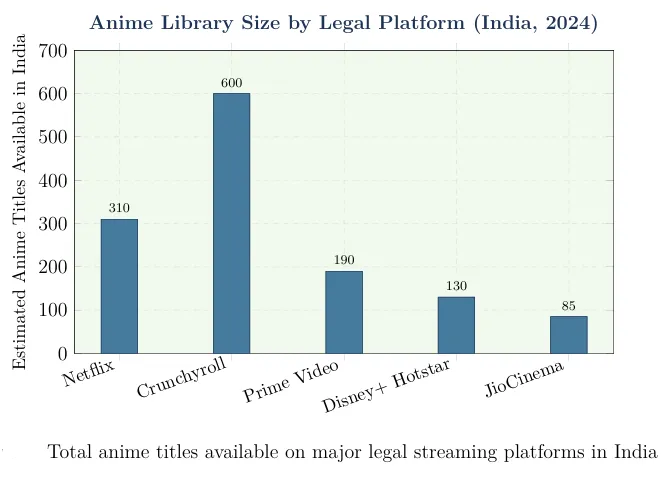
Supporting legal platforms directly funds the studios that create the content, ensures higher quality dubbing, and encourages more regional language investments in the future. Every legal stream is a vote for more Tamil, Hindi, and Telugu anime.
TV Channels That Air Dubbed Anime in India
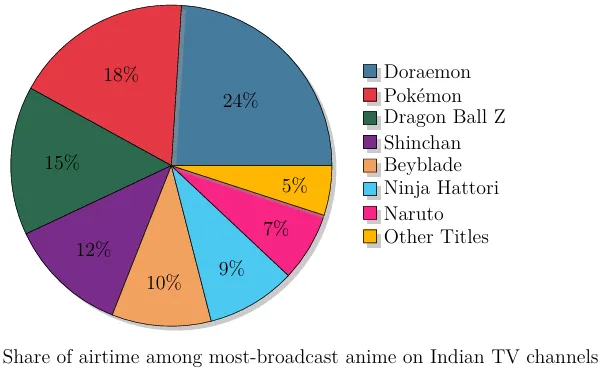
Long before streaming took over, Indian kids were introduced to anime through television, and that tradition continues.
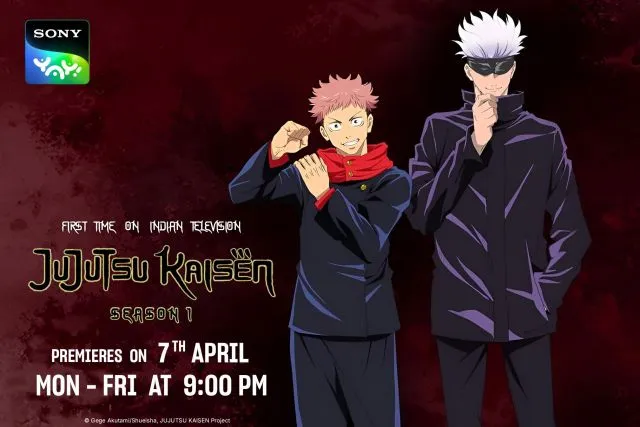
If you prefer the traditional route, Indian television networks have finally woken up to the massive demographic of anime fans. Sony YAY! made a massive splash by acquiring the broadcast rights to Naruto, airing it with dedicated audio tracks in Hindi, Tamil, Telugu, Malayalam, and Bengali. This move single-handedly introduced the Hidden Leaf Village to a new generation across the country.
Similarly, Cartoon Network India has heavily leaned into the Dragon Ball franchise, broadcasting Dragon Ball Super in multiple regional languages. These television broadcasts are crucial because they normalize the medium, bringing high-octane Japanese animation into living rooms without requiring a dedicated streaming subscription or a fast internet connection.
Cartoon Network India and Pogo have historically aired Hindi-dubbed anime including Dragon Ball Z, Pokémon, Beyblade, and Doraemon. These channels remain active and occasionally air reruns of classic series.
Hungama TV airs a wide range of dubbed anime and animated content in Hindi, making it one of the more consistent broadcast destinations.
Sony YAY! has aired Hindi-dubbed anime and continues to be a destination for younger audiences.
For Tamil and Telugu audiences, regional broadcasters like Sun TV, Vijay TV, Gemini TV, and ETV have periodically aired dubbed anime series, particularly Pokémon, Doraemon, Shinchan, and Ninja Hattori. These dubs are sometimes produced locally and carry a distinct regional flavor that many fans grew up loving.
The Underground Network: Navigating GitHub Apps and Extension Repos
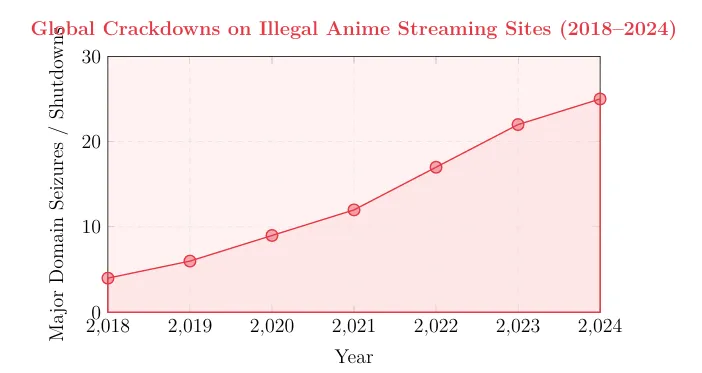
The precarious nature of this underground network is best illustrated by the relentless, coordinated legal crackdowns that have recently decimated some of the internet's most visited piracy hubs. Over the last few years, the streaming landscape has been completely reshaped by aggressive anti-piracy campaigns led by international coalitions like the Alliance for Creativity and Entertainment (ACE) and government-backed initiatives such as Brazil’s “Operation Animes.” Massive titan sites that once commanded hundreds of millions of monthly visits, most notably AniWave, which fell in late 2024, and the monolithic HiAnime (formerly Zoro.to/Aniwatch), which was permanently taken offline in March 2026 after drawing intense scrutiny from the U.S. government, have been wiped from the web entirely. When these centralized, heavy-hitting hubs collapse, they take down hundreds of associated scraper tools and GitHub repositories with them. This domino effect instantly bricks the open-source apps relying on their APIs, leaving millions of users with dead links, endless loading screens, and a stark reminder that the illegal streaming ecosystem is a fragile house of cards perpetually on the verge of collapse.

Source (animexnews.com): https://animexnews.com/over-30-anime-piracy-websites-shut-down-this-month-a-major-blow-to-illegal-streaming/#growSource=copyLink
On the complete opposite end of the spectrum lies a vast, unofficial ecosystem built by software developers to bypass paywalls, geographical restrictions, and ads. For those well-versed in Android software architecture, the methods used here are incredibly sophisticated. Instead of relying on ad-riddled, browser-based pirate sites, this tech-savvy demographic utilizes open-source Android applications hosted on GitHub.
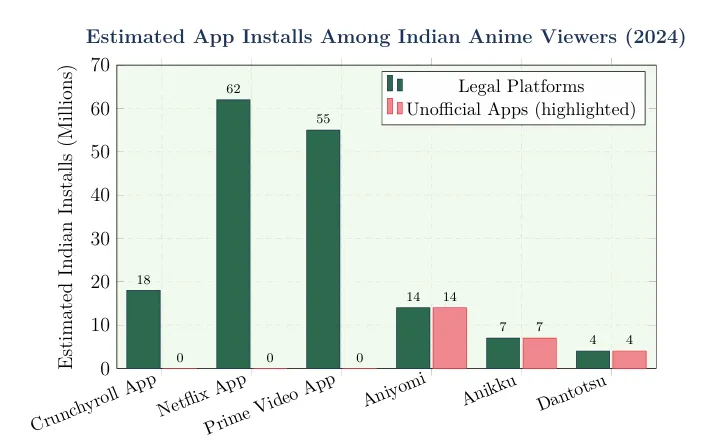
Aniyomi and Anikku Two of the most prominent applications in this space are Aniyomi (a dedicated anime and manga fork of the legendary Tachiyomi project) and Anikku. If a user downloads these APK files straight from their respective GitHub repositories, they will find the apps completely empty. Out of the box, they are legally compliant, blank video players with excellent, modern user interfaces. They do not host a single video file or subtitle.
The Mechanics of Repositories The entire functionality relies on a modular system known as "extension repositories." To use these apps, a user must venture onto external forums, Reddit communities (like r/animeapp), or Discord servers to hunt down specific repository URLs (often referred to as "repos"). Once a user copies and pastes this repo link into the settings menu of Aniyomi or Anikku, the app suddenly populates with third-party plugins.
These extensions act as automated web scrapers. When a user searches for a Tamil-dubbed episode of an anime, the extension silently scrapes dozens of third-party, unauthorized streaming websites in the background. It pulls the raw video file directly from those servers, strips away all the malicious pop-up ads normally found on pirate sites, and serves the clean video straight into the app's player. This allows users to switch between different scrapers instantly if one server goes down, creating a highly personalized, ad-free, and technically illegal streaming powerhouse.
The Hidden Costs: Why the Unofficial Route is a Double-Edged Sword

While the software engineering behind these open-source scrapers is undeniably clever, utilizing these illegal avenues comes with significant, undeniable downsides.
The Instability of the Pirate Ecosystem First and foremost is the inherent volatility of unauthorized streaming. Host sites are locked in a perpetual game of whack-a-mole with copyright enforcers. Domains are seized, servers are wiped, and the scraper extensions you rely on will inevitably break. Because core apps like Aniyomi no longer host extensions natively due to legal threats, users are forced to constantly hunt for new, functional repository links online—a tedious and frustrating process.
Security Risks Navigating the web to find these external repository links exposes your device to substantial risks. The subreddits, forums, and unofficial websites distributing these ever-changing repo links are often littered with phishing attempts, intrusive trackers, and malware disguised as APK updates.
The Devastating Impact on Regional Dubs However, the most critical reason to avoid the illegal route is the direct, negative impact it has on the anime industry in India. High-quality Tamil, Hindi, and Telugu dubs are incredibly expensive to produce. They require dedicated scriptwriters, voice actors, audio engineers, and studio time. When viewers bypass official platforms to watch a regional dub on an unofficial app, the localized viewership data simply does not exist
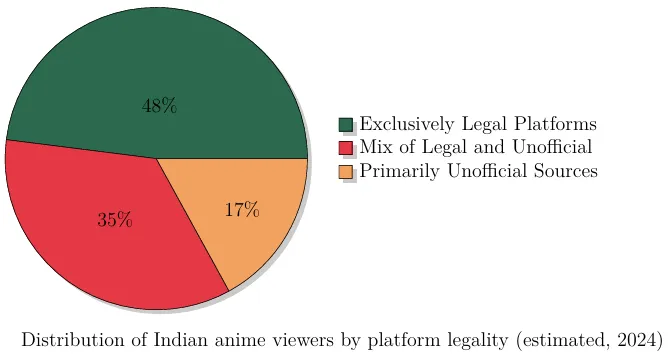
If studio executives in Japan and distributors in India do not see a tangible return on their financial investment in regional localization, they will simply pull the plug and stop funding it. Every pirated stream is effectively a statistical vote against getting more regional dubs in the future.
The Final Verdict

We are currently living in the definitive era for anime consumption in India. With official subscriptions like Crunchyroll dropping to roughly ₹40 a month on an annual plan, and platforms like JioCinema heavily integrating anime into their premium services, the legal route is not only the safest option, it is arguably the most convenient. Supporting official releases ensures that the pipeline of Tamil, Hindi, and Telugu dubs stays open and financially viable, allowing the Indian anime community to thrive without relying on broken scraper extensions, endless buffering, and shady web forums.
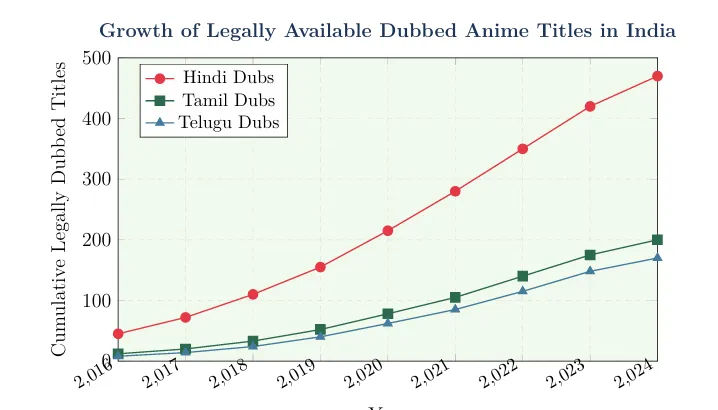
India's legal anime ecosystem is genuinely improving. If you primarily watch Hindi-dubbed anime, Netflix, Crunchyroll, and Prime Video between them cover a substantial catalogue. Tamil and Telugu options remain limited but are growing. For content that simply isn't available legally in your language yet, the unofficial options exist and are widely known, but they come with ethical costs, security risks, and no long-term stability.
The best thing Indian fans can do for the future of regional anime is to stream legally whenever possible, share legal links rather than pirated ones, and make noise on social media requesting Tamil and Telugu dubs from legitimate platforms. Studios and streamers do pay attention to regional demand signals. The more visible Indian regional fandom becomes in the legal space, the faster that catalogue will grow.
Updates
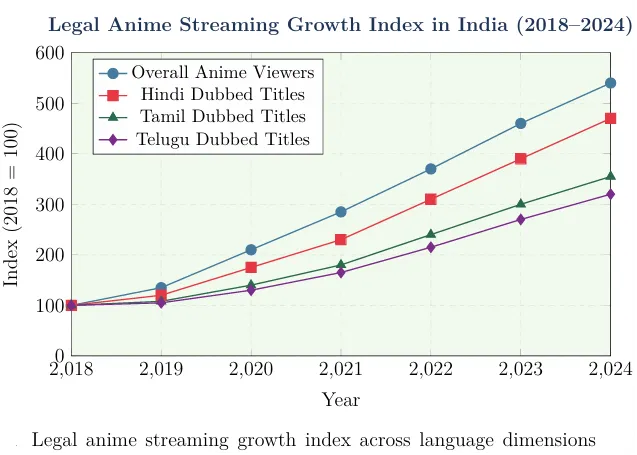
The landscape of Indian streaming and dubbing has entered a transformative era in 2026, and it has changed quite a bit after the initial publication of this article. Characterized by a massive push toward regional linguistic accessibility. Major platforms like Crunchyroll, Sony YAY!, and Netflix have pivoted to a "multi-vernacular" strategy, rolling out high-profile titles like One Piece, Jujutsu Kaisen, and One Punch Man in Hindi, Tamil, Telugu, and Bengali. This shift reflects India’s ascent as the third-largest global anime market, where viewership penetration has reached 41%. Unlike previous years where dubs arrived months after the Japanese premiere, 2026 has standardized "near-simultaneous" releases, with series like Witch Hat Atelier and Frieren: Beyond Journey's End receiving weekly regional updates. This industrialization of localization, supported by major domestic studios, has seen Hindi viewership frequently surpass English-subtitled numbers, signaling that regional language support is no longer a luxury but a fundamental requirement for capturing the Indian audience.